
What we do
Our Services
Six services, one plan of care. Most patients need more than one of these, and the point is that everyone is working from the same page — literally the same physician-approved plan.
Everything here happens in your home, on a schedule you know in advance.
Skilled Nursing
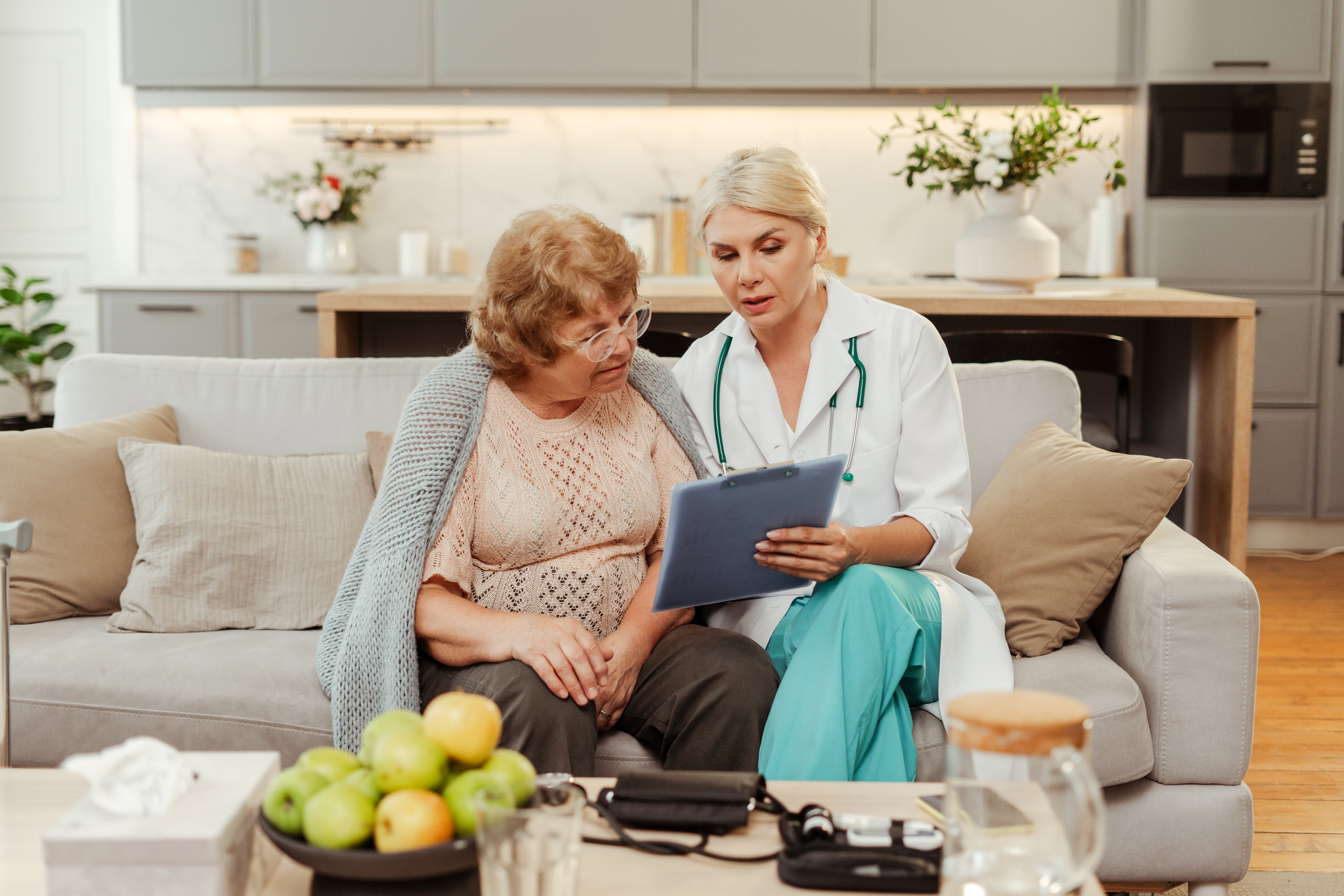
Registered nurses manage medications, wounds and complex conditions in the home — and catch small changes before they become hospital stays.
A registered nurse is usually the first clinician through the door and the one who keeps the whole plan honest. They see the pill bottles on the counter, the swelling that was not there last week, the wound that is healing slower than it should — and they call the physician before it turns into an ambulance ride.
What this includes
- Medication management, reconciliation and teaching
- Wound care and dressing changes
- Vital sign and symptom monitoring
- Disease process education for patient and family
- Injections and IV therapy
- Catheter and ostomy care
- Post-surgical care
- Direct coordination with your physician
Physical Therapy
Rebuild strength, balance and mobility with a program built around the rooms and stairs of your own home.
A clinic has handrails, level floors and no dogs underfoot. Your home does not. Therapy here is built around your actual stairs, your actual bathroom and the distance from your bed to the kitchen — which is why the progress tends to hold.
What this includes
- Strength, endurance and conditioning work
- Balance training and fall prevention
- Gait training and assistive device fitting
- Rehabilitation after joint replacement or surgery
- Pain management techniques
- A home exercise program you can actually keep up
Occupational Therapy
Return to dressing, bathing and cooking safely, with practical adjustments that protect independence.
Occupational therapy is about the ordinary things that stop being ordinary: buttoning a shirt, getting out of the tub, making lunch without needing to sit down halfway. Small adjustments to how a task is done — and to the room it happens in — give back a surprising amount of independence.
What this includes
- Retraining for bathing, dressing and grooming
- Home safety evaluation and modification advice
- Adaptive equipment selection and training
- Energy conservation techniques
- Upper-body strength and fine motor skills
- Cognitive strategies for daily tasks
Speech Therapy
Support for speech, memory and swallowing after a stroke, surgery or neurological diagnosis.
Speech therapy covers more than speech. It also covers swallowing — which is what keeps food out of the lungs — and the memory and reasoning that let someone follow their own medication schedule. After a stroke or a neurological diagnosis, these are often the difference between managing at home and not.
What this includes
- Speech and language retraining after stroke
- Swallowing evaluation and therapy
- Diet texture and safe-swallowing recommendations
- Cognitive-communication therapy
- Voice disorders
- Communication strategies for the family
Home Health Aide
Compassionate help with bathing, grooming and daily routines, supervised by our clinical team.
The aide is often the person a patient sees most, and the one who notices first when something changes. Ours work under a plan written and supervised by a registered nurse, so what they observe on a Tuesday morning gets back to the people who can act on it.
What this includes
- Bathing, grooming and dressing assistance
- Mobility and safe transfer assistance
- Toileting and incontinence care
- Light meal preparation
- Range-of-motion exercises as directed by therapy
- Supervised by a registered nurse
Not sure which of these you need?
You are not supposed to know. That is what the start-of-care assessment is for: a nurse evaluates the situation and recommends the combination, and your physician approves it. Call(239) 270-5498 and we will walk you through it.
We are here every step of the way.
Tell us what is going on at home. We will tell you which services fit, what your insurance is likely to cover, and what happens next.