
For families caring at home
Patients & Families
Most of the care happens between our visits — in the ordinary moments of a Tuesday afternoon. This page is the practical part: real tips for making those moments safer and easier, whether or not you ever need to call us.
And if you do need more help than that, here is exactly what starting home health looks like, and what you are entitled to as a patient.
Practical help, starting today
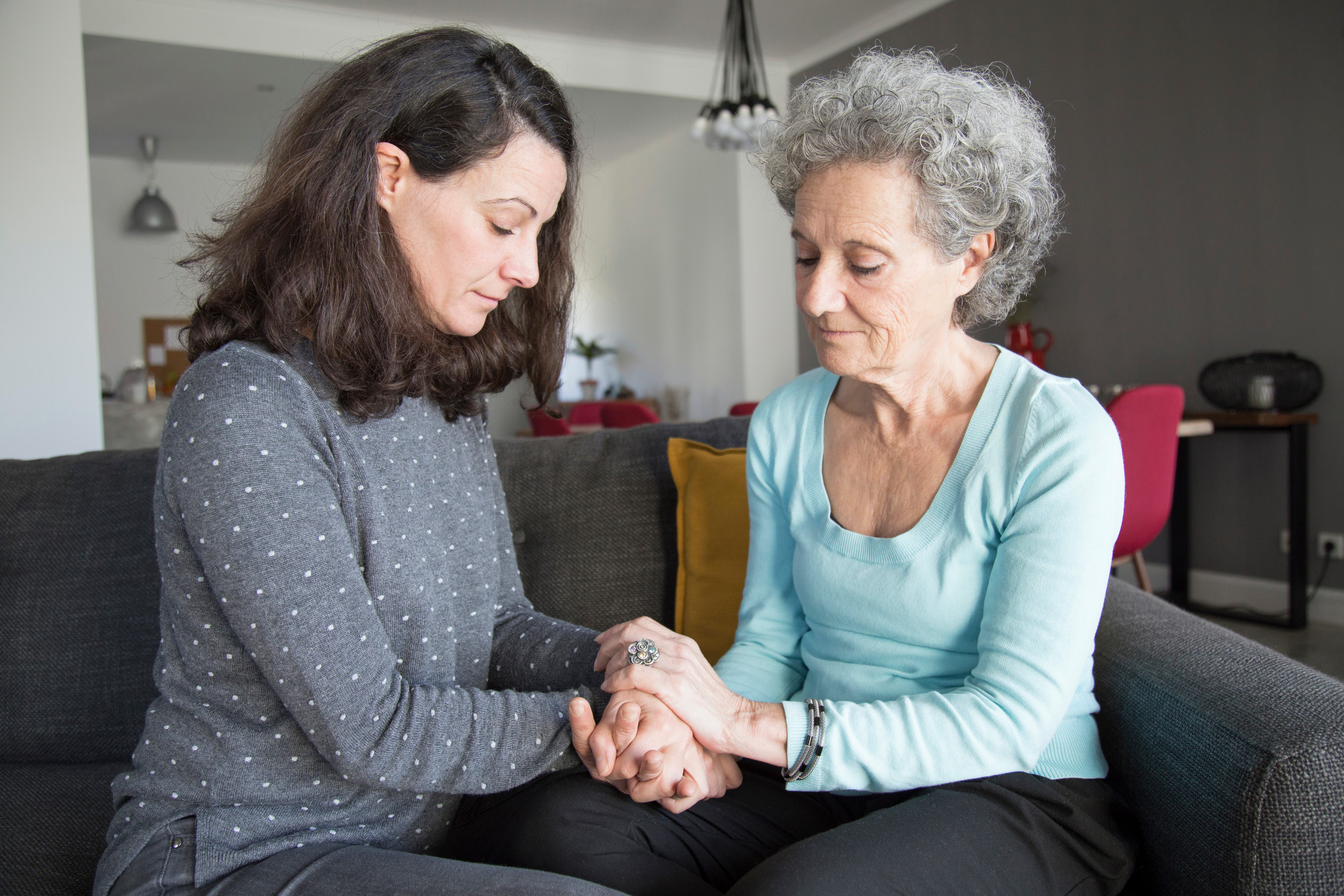
Caring for a loved one at home
You do not have to wait for a nurse to start doing this well. These are the things that make the biggest difference — the ones our clinicians repeat most often.
General guidance, not a diagnosis. If you are ever unsure about a specific symptom or medication, call us or their physician.
Home safety & falls
A fall is the single most common thing that turns a manageable situation into a hospital stay.
- Clear walkways of rugs, cords and clutter — a loose rug is one of the most common causes of a fall at home.
- Add grab bars near the toilet and in the shower, anchored into a wall stud. A suction-cup bar is not strong enough.
- Keep a phone within reach in every room they spend time in, including the bathroom.
- Add a nightlight to hallways and stairs — a motion-sensor light costs a few dollars and prevents more falls than people expect.
- If they use a cane or walker, check that the rubber tips are not worn smooth.
Daily care
The goal is not to do everything for them — it is to make what they can still do, safe.
- Let them do what they can do safely themselves. Helping too much erodes strength and confidence faster than the condition does.
- Keep a consistent daily routine — unpredictability is disorienting, especially with memory changes.
- A shower chair and a handheld showerhead turn a risky task into a manageable one.
- Lay clothes out in the order they go on; it reduces frustration for both of you.
- Check the skin during bathing for redness, especially over the tailbone, heels and hips — that is how a pressure sore starts, and it is far easier to prevent than to treat.
Medication safety
Medication mix-ups send more people to the hospital than most families realize.
- Use a weekly pill organizer, even if they have always managed their own medications — it catches missed and doubled doses.
- Keep one written list of every medication, dose and time. Bring it to every appointment and every ER visit.
- Ask a pharmacist before crushing a pill or opening a capsule — some medications stop working correctly, or become dangerous, when crushed.
- Watch for confusion, dizziness or new unsteadiness after any new medication or dose change. It is often blamed on "just getting older" instead of the medication.
When to call
You know their normal better than anyone. Trust it.
- Call 911 for: sudden confusion, slurred speech, one-sided weakness, chest pain, trouble breathing, or a fall with a head injury.
- Call the doctor the same day for: a new fever, a wound that looks red or warm, new swelling in the legs, or several days of poor appetite.
- If something feels off and you cannot say exactly why, that is still a reason to call. A caregiver’s instinct is often the earliest warning sign there is.
Caring for yourself
You cannot pour from an empty cup, and burnout does not announce itself.
- Caregiver burnout is real and common. Noticing it early is not weakness — it is what keeps you able to keep helping.
- Accept help when it is offered, and be specific when you ask for it. "Can you sit with Mom Thursday 2 to 4?" gets a yes far more often than "let me know if you can ever help."
- Take the breaks you are offered, even short ones. Caregiving without rest is not sustainable for anyone.
If you need more than tips
How professional care starts, step by step
If any of this starts to feel like more than you can safely manage alone, here is exactly what happens when you call us.
- 1
Reach Out
Call us, or have the physician send the order. The insurance questions get answered on that first call — not three days later.
- 2
Assessment
A nurse comes to the home, reviews every medication, and looks at the real obstacles: the stairs, the shower, the loose rug.
- 3
Plan of Care
The physician approves a plan built on specific goals — walking to the mailbox, managing the insulin, sleeping through the night.
- 4
Care Begins
Visits start on the agreed schedule, with a team you can name and recognize at the door.
- 5
Ongoing Support
We report progress back to the physician and adjust the plan as things change — in either direction.
Before you call: have their medication bottles ready — not a list — along with their insurance card and your biggest worry written down in one sentence. That is enough to start.
What working with us is like
Our clinicians are in the house a few hours a week. Somebody else covers the other hundred and sixty. Four commitments we make to that person.
You will know who is coming
Names and visit schedule in advance, not a stranger at the door on a Tuesday.
You can call and reach a person
Monday – Friday, 9:00 AM – 5:00 PM. After hours, the 24/7 clinical line is answered by a clinician.
You will be taught, not just told
Wound care, transfers, medication timing — whatever you are going to be doing between our visits.
You get a say in the plan
Goals are written in your words. If the schedule is not working, say so and we change it.
These tips are just the basics. The Caregiver Academy goes deeper on memory care, chronic conditions and more — in plain language, free to the families we serve.
Your rights as a patient
These are not favors we grant. They are yours, and you can hold us to every one of them.
You receive the complete written notice of rights, and our HIPAA notice of privacy practices, at the start of care.
- Be treated with respect and dignity, and have your property treated with care
- Be told about your care in a language and manner you understand
- Take part in planning your care, and refuse treatment
- Have your health information kept private, as required by HIPAA
- Voice a complaint without fear of it affecting your care
- Be told in advance of any changes to your plan of care
If something is not right, tell us first — call (239) 270-5498. You also have the right to contact the Florida Agency for Health Care Administration directly, at (888) 419-3456, and doing so will never affect your care. Our state license number is 299996724.
We are here for you.
Any question about a symptom, a schedule or a bill — one phone call and a person answers.