
Learn it here. Free, and in plain language.
The Caregiver Academy
A nurse is in the house a few hours a week. A daughter, a husband, a neighbor covers the rest — usually with no training and no warning.
So we wrote the answers down. Every question below is one families actually ask us, answered the way our nurses answer it on the phone. Read it at two in the morning if that is when you need it. Nothing to sign up for, nothing to buy.
- 6 modules
- 33 questions answered
- About 4 minutes each
- Free — no sign-up

Start here
How to use the Academy
You are not meant to read this front to back. Find the thing that is worrying you tonight and read that.
Read the warning signs first
If you read one thing on this page, make it the list below. It is the difference between a phone call and an ambulance, and it takes two minutes.
Open the module you need
Every question is written to stand on its own. Nothing here assumes you read the one before it, so you can jump straight to the one that matches your week.
Call when it does not match
These answers describe the usual case. Your situation may not be the usual case — and when what you are seeing does not match what you read, that is exactly when to call.
The six modules
- Recovery at home: the first two weeks5 questions · 5 min read
- Heart failure, COPD and diabetes at home5 questions · 5 min read
- Memory, dementia and the hard days6 questions · 5 min read
- Medications, wounds and infection6 questions · 5 min read
- Caring for the caregiver5 questions · 4 min read
- Home health, Medicare and what it costs6 questions · 5 min read
Before anything else
When to call — and who to call
Most of what frightens a family at home turns out to be manageable. A short list does not. Learn this list first, and put it on the refrigerator where someone else can find it.

Call 911 now
Do not drive them yourself, and do not wait to see if it passes.
- Chest pain or pressure, or pain spreading into the arm, neck or jaw
- Sudden trouble speaking, a drooping face, or weakness on one side — call even if it goes away
- Trouble breathing while sitting still, or lips and fingertips turning bluish or gray
- A fall with a blow to the head, a limb that looks wrong, or someone who cannot get up
- Bleeding that does not stop after ten minutes of steady, firm pressure
- Confusion that arrives suddenly, a seizure, or someone you cannot wake fully
Call us today
These rarely become emergencies if somebody looks at them the same day.
- A temperature of 100.4 °F or higher, or shaking chills
- Three pounds gained overnight or five in a week, or ankles and belly newly swollen
- A wound that turns red, warm, swollen, foul-smelling, or newly painful
- Vomiting or diarrhea that keeps them from holding fluids down for a day
- A fall with no injury — it is the best warning you will get before the next one
- A new medication that leaves them dizzy, drowsy, or not themselves
- Blood sugar readings well outside the range the physician set for them
- No urine for eight hours, or urine that is dark, bloody or burning
Bring it up at the next visit
Worth raising, not worth losing sleep over. Write it down so it does not get forgotten at the door.
- Sleep that has gotten worse, appetite that has dropped off, low mood
- An exercise that has stopped feeling hard — or one that hurts
- Equipment that does not fit: a walker set too low, a shower chair that slides
- Questions about the plan of care, the visit schedule, or the paperwork
- Anything the caregiver is quietly struggling with. That belongs in the plan too.
This is general education, not a diagnosis. If something feels wrong and it is not on this list, call anyway — we would much rather answer the question.
The lessons, module by module
Together they cover most of what families ask us in the first month at home. Open a question to read the answer.
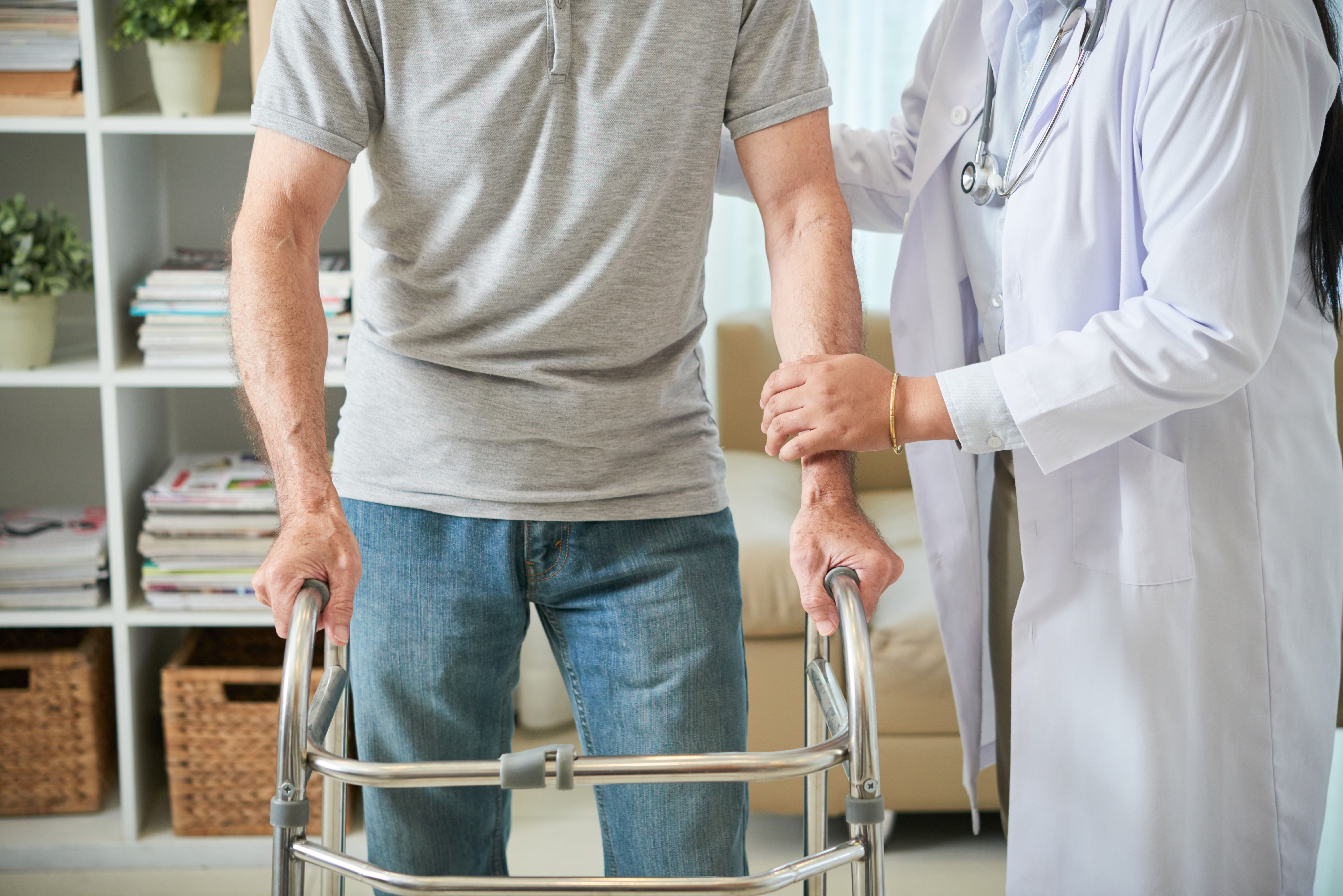
Recovery at home: the first two weeks
Most readmissions happen in this window, and most of them start with something small. Here is how to get through it.
5 questions · 5 min read
Why are the first two weeks after a hospital stay the risky ones?
Because everything changes at once. New medications, a body that is weaker than it was two weeks ago, and no nurse down the hall. Most readmissions happen in this window and most of them start small: a missed dose, a day of not drinking enough, a fall on the way to the bathroom at night. The first two weeks are not about doing more. They are about doing the boring things reliably.
What should we actually do the day they get home?
Four things, in this order. Put every medication bottle on the kitchen table — including the ones from before the hospital and the vitamins — and compare them against the discharge list, because duplicates hide there. Call the physician’s office and book the follow-up visit before the calendar fills. Walk the path from the bed to the bathroom and clear it: the rug, the cord, the low stool nobody sees at night. And write the phone numbers somewhere a stranger could find them: ours, the physician’s, the pharmacy.
How do we prevent a fall?
Falls at home are rarely about balance alone. They are about the trip to the bathroom in the dark, shoes with no back to them, the edge of a rug, a chair too low to stand up from, and the rush that comes from waiting too long to go. So: a night light that stays on, and a lit path. Have them sit on the edge of the bed and count slowly to ten before standing — blood pressure needs those seconds. Closed-heel shoes, indoors too. And keep the walker on the side of the bed they actually get out of, not the side that looks tidy.
How much should they be moving?
More often than you would think, and less at a time than you would think. Several short walks beat one long one, and sitting up in a real chair for meals does more for the lungs and the appetite than lying propped up in bed. The rule therapists use: they should be able to talk in short sentences while they move. Too breathless to speak means stop, sit, and tell us about it.
What counts as normal tiredness, and what does not?
Being wiped out after a hospital stay is expected, and it improves week over week — not day over day. What is not expected: sleeping through meals, being too weak today to do what they did yesterday, or new confusion. A step backward that lasts more than a day deserves a call, and it usually has a findable cause: dehydration, an infection, or a medication doing more than it should.
What to remember
The first two weeks are won with boring reliability — the medication list, the fluids, the follow-up appointment, and a lit path to the bathroom.
Heart failure, COPD and diabetes at home
Knowing which change means “mention it Monday” and which means “call right now”.
5 questions · 5 min read
Heart failure: why weigh every single morning?
Because the scale sees fluid coming back days before the ankles or the breathing do. Same scale, same time — first thing in the morning, after the bathroom, before breakfast, in about the same clothing — and write it down. Three pounds overnight or five in a week is a call, even if they feel completely fine. That is exactly the point: at that stage they do feel fine, and it is still easy to fix.
COPD: how do we tell a bad day from something worse?
A bad day gets better with rest and the rescue inhaler. A flare-up does not: the breathlessness stays even sitting still, the rescue inhaler gets used more often than usual, the mucus changes color or thickness, and lying flat becomes impossible. Two nights of sleeping upright in order to breathe is a call. In the meantime, pursed-lip breathing buys real minutes — in through the nose for a count of two, out slowly through pursed lips for a count of four.
Diabetes: what do we watch at home?
Lows and feet. A low — shaky, sweaty, suddenly irritable or confused — is treated with about 15 grams of fast sugar (half a cup of juice, four glucose tablets), rechecked after 15 minutes, then followed with real food. Feet get looked at every day: top, bottom and between the toes, because a sore they cannot feel is how a small problem becomes a hospital one. And sick days change the rules — when someone with diabetes stops eating normally, the readings need checking more often, not less.
Why does a small infection matter so much in an older adult?
Because it often skips the fever and shows up as confusion, a fall, or a sudden loss of appetite instead. When someone is “not themselves” and nobody can say why, infection is one of the first things worth ruling out — urinary infections especially. It is one of the most common reasons a family calls us frightened about dementia and finds out it was something treatable all along.
How do we keep track of all of it without living in a spreadsheet?
One notebook by the chair, one line a day: the weight, the blood sugar or blood pressure if those are being watched, and anything unusual. That is it. The value is not in the numbers themselves — it is in being able to answer “when did this start?” when a nurse or a physician asks. A family that can say “Tuesday, and it has gotten worse each day since” gets a much better decision than one that says “a little while ago”.
What to remember
Chronic conditions punish surprises and reward routine: same scale, same time, feet checked daily, and a written number for what counts as too much.
Memory, dementia and the hard days
Practical approaches for the days that do not go the way the guidebook says they will.
6 questions · 5 min read
What is normal forgetting and what is not?
Forgetting a name and recovering it an hour later is aging. Forgetting how to get home from a store they have driven to for thirty years is not. The line families find useful: normal aging misplaces the keys, dementia forgets what the keys are for. And a memory change that arrives over days or weeks rather than years is not dementia until proven otherwise — infections, dehydration and medications all cause exactly that, and all of them get better.
They keep asking the same question. What do we say?
Answer it as though it were the first time, briefly, and then change what the room is doing — put on music, start a task, move to another chair. Arguing with the memory does not restore it; it only adds the humiliation of being corrected. And when the question is anxious — “when is my mother coming?” — the anxiety is the real question. Answering the feeling works better than answering the fact: you are safe, I am here, we will have lunch soon.
Late afternoons are the worst. Why?
It is common enough to have a name: sundowning. Fatigue, fading light and a whole day of effort stack up, and the late afternoon turns agitated. What helps is unglamorous. Open the curtains during the day and turn the lamps on before dusk rather than after. Move the demanding things — the bath, the appointment, the visitors — to the morning. Keep afternoon caffeine and long naps out. And make the evening routine identical every day, because a predictable evening is itself a treatment.
How do we make the house safer without turning it into a hospital?
Aim at the three things that actually hurt people: the stairs, the stove and the front door. Good light everywhere, especially the nighttime path to the bathroom. Grab bars where they are used, not where they look right. Turn the water heater down so a tap cannot scald. Keep medications and car keys out of sight. And a chime or alarm on the front door is worth more than any lock, because walking out of the house is the risk that ends worst.
How do we talk about giving up driving?
Not as one conversation, and never as an ultimatum. Bring the physician into it — a recommendation from the doctor carries weight a daughter’s never will. Talk about specific incidents rather than the diagnosis: the scrape on the fender, getting lost on a familiar route, the near miss at the light. And arrive with a plan, not just a loss: who drives them to church, to the store, to the appointments. Handing over the keys feels like handing over the last piece of adulthood, and it goes better when somebody hands something back.
They refuse care from us. What now?
Refusal is usually about dignity rather than the task. It goes better when you offer a choice inside the task instead of a choice about it — “shower before breakfast or after?” rather than “will you shower?” — and when you narrate what you are doing before you do it. Same time, same order, same person where possible. If refusal is new and sudden, treat it as a symptom and call: pain, constipation and infection all show up first as someone who has stopped cooperating.
What to remember
Do not argue with the memory. Answer the feeling, keep the day predictable, and let the physician carry the hardest messages.
Still not sure what you are looking at?
Describe it to a nurse. The call is free, it takes about ten minutes, and it settles most of what families lie awake about.
Medications, wounds and infection
Most medication errors at home are timing and duplication, not the wrong pill. Both are preventable.
6 questions · 5 min read
What is the most common medication mistake at home?
Duplication. Someone comes home from the hospital with a new prescription for something they already had under a different name, and the brand and the generic sit on the same shelf getting taken twice. The fix is unglamorous and it works: put every bottle in one bag — vitamins, supplements, and anything from another doctor included — and have a nurse or a pharmacist go through the whole bag against the current list. Do it after every hospital stay, every time.
How do we build a system that survives a bad week?
One list, one place, one person. A weekly pill organizer filled on the same day each week — Sunday works — by the same person every time. An alarm on the phone for each dose, not a mental note. A written list on the refrigerator with the drug, the dose, the reason and the prescriber, and a copy in the wallet for the emergency room. If a dose gets missed, do not double the next one: write down what happened and ask us or the pharmacist. Doubling is what turns a missed dose into a hospital visit.
What should we ask about a new prescription?
Five questions, and any pharmacist will answer them for free: what is it for, when do I take it, what does it interact with, what side effect should make me call, and how long am I on it? Ask specifically about dizziness and drowsiness, because those are what cause the falls. And ask whether it replaces something already on the list or joins it — that question catches most duplications before they start.
What does an infected wound look like?
Compare it to yesterday, not to a picture in a pamphlet. Redness spreading past the edge, warmth, swelling, new pain in a wound that had been hurting less, drainage turning thick or yellow-green, an odor, or a fever. Take a photo each day in the same light — it is the easiest way to see a change too slow to notice. Any of those is a same-day call, and every one of them is far easier to treat on the day it starts.
How do we keep an infection out of the house?
Handwashing before and after any care task beats every other precaution combined — twenty seconds with soap, which is longer than it feels. Beyond that: no shared razors or nail clippers, a new toothbrush after an illness, a catheter bag kept below the level of the bladder and never resting on the floor, and visitors with a cough kept away for a week. Anyone recovering from surgery or living with diabetes has less margin than a healthy adult, and the same cold lands differently.
They are barely eating or drinking. How worried should we be?
Dehydration is behind a startling share of the falls, confusion and “sudden weakness” we get called about, and it builds quietly over days. Aim for small amounts often rather than a big glass on demand: a cup within reach at all times, something to drink with every medication, and foods that carry water — soup, melon, gelatin, yogurt. Watch for dark urine, a dry mouth, or a day with no bathroom trip. If someone is not keeping fluids down for a day, that is a same-day call, not a wait-and-see.
What to remember
One list, one organizer, one person filling it — plus a full bag-of-bottles review after every hospital stay.

Caring for the caregiver
The part nobody warns you about: what this costs the person doing it, and how to keep being able to do it.
5 questions · 4 min read
Is it normal to feel resentful?
Yes, and it is close to universal. Caregiving is a job with no end of shift, done for someone whose decline you cannot stop, usually on top of another job. Resentment is what exhaustion sounds like from the inside — it is not a verdict on how much you love the person. What it does mean is that the arrangement needs help: more hands, more sleep, or fewer tasks. Caregivers who never get relief eventually stop being able to do the work at all.
What does burnout actually look like?
It rarely announces itself. It looks like sleeping badly and waking tired, getting sick more often than you used to, snapping at the person you are caring for and then feeling awful about it, letting your own appointments slide, and losing interest in everything that is not the caregiving. If a friend described those five things to you, you would tell them to get help. The same rule applies to you.
We cannot afford to bring in help. What is actually out there?
More than most families find on their own, which is exactly why medical social services exist. In Florida, the Area Agency on Aging for this region is the front door: they screen for respite programs, caregiver support, meals and transportation. Veterans have their own benefits that families routinely miss. Some long-term care policies include respite hours nobody ever claimed. If home health is already in place, ask for the medical social worker — finding these programs is their entire job, and it costs you nothing extra.
One sibling is doing everything. How do we fix that?
Stop dividing by fairness and start dividing by task. The one who lives nearby cannot be the only one — but the one who lives three states away can own the medication refills, the insurance calls, the appointment scheduling and the bills, all of which happen by phone from anywhere. Then write it down. A shared list settles more sibling arguments than any conversation, because it turns “you never help” into a specific thing somebody either did or did not do.
How do we have the conversation nobody wants to have?
Early, during a calm week, in small pieces. Ask what matters to them rather than which treatments they want: what a good day looks like, what they would not want to lose, who should speak for them if they cannot. That gets you further than any form. Then put it in writing — in Florida, a health care surrogate designation and a living will — and give a copy to the physician, to the hospital and to the person named. A wish nobody wrote down does not survive the emergency room.
What to remember
Ask for the medical social worker, divide the work by task rather than by guilt, and treat your own sleep as part of the plan of care.
Home health, Medicare and what it costs
What it is, who qualifies, who pays for it, and how it differs from the private help people confuse it with.
6 questions · 5 min read
What is home health, exactly?
Skilled medical care delivered in the home under a physician’s plan of care: nursing, physical, occupational and speech therapy, home health aide support and medical social services. It is intermittent — visits of about an hour, several times a week — and it aims at a goal: heal the wound, rebuild the walking, get the medications stable. It is not the same as private-duty or companion care, which is help by the hour with daily life and does not require a physician’s order.
Who qualifies?
In general three things have to be true at once: a physician orders the care, there is a skilled need such as nursing or therapy rather than only help around the house, and the person is considered homebound — meaning that leaving home takes a considerable and taxing effort. Homebound does not mean bedbound. People go to church, to the barber and to dialysis and still qualify. Every case is judged on its own, and it costs nothing to have us look at yours.
Who pays for it?
Medicare, Medicaid and most private plans cover home health when the criteria are met and the care comes from an agency approved under that plan. The rules differ by plan, and the honest answer is that nobody should guess: we verify the benefits and tell you what is covered before the first visit, so the cost conversation happens at the start instead of in a bill three weeks later.
How does it start, and how quickly?
It starts with an order from the physician. You can call us first — most families do — and we coordinate with the physician’s office to get the order in place. Then a nurse comes to the home for the start-of-care assessment: every medication, the real obstacles (the stairs, the shower, the loose rug) and the goals. Hospital discharges are prioritized. Tell us the timeline you are working with and we will tell you honestly what is possible.
What should we have ready before we call?
It makes the first call much shorter: the patient’s full name and date of birth, the insurance cards, the name and phone number of the physician who will sign the order, the hospital discharge paperwork if there was a stay, and every medication bottle within arm’s reach. If you do not have all of that, call anyway — we can start with far less.
What happens when home health ends?
Home health is built around goals, so it ends when the goals are met or a skilled visit is no longer needed — and that is a good outcome, not an abandonment. Before the last visit you should have four things in hand: a written home exercise program, a current medication list, the follow-up appointments booked, and a plain description of what to watch for and who to call. If a discharge is coming and you do not have those, ask for them.
What to remember
A physician’s order, a skilled need and homebound status — and a benefits check before the first visit, never after it.

Did not find your question?
Send it to us. If enough families ask the same thing it becomes the next lesson in the Academy — and either way, you get an answer.
The Academy is general education for families, written by our clinical team. It is not a diagnosis and it does not replace the instructions your physician gave you for your situation. When the two disagree, follow your physician — and call us so we can help sort it out.
Caring for someone should not mean guessing.
Ask us anything — how to transfer someone safely, what a symptom means, which program might cover the cost. We would rather you call than wonder.